If I am being honest, I think I can be. I don’t mean to be. I want to be nice all the time but there are times when I feel like a thing possessed.
 Here are some quotes from people who have apparently been in relationships with borderlines:-
“These people (with BPD) are emotional vampires.”
“They are all the same, they suck us dry, we are only supply to them, then they move on to another innocent victim.”
“They are all evil, pure evil.”
This is of course not true! Well I would say that, wouldn’t I?
One of the most distinguishable BPD traits is fear of abandonment. And the irony in BPD/non-BPD partnerships is that people with BPD don’t want people to leave them, yet they act in ways that make people do just that. People with BPD are so convinced that they are unlovable that it’s as if the person is already set to leave before the relationship has begun so,
“Hey, let’s get it over with!”
Something to remember is that most borderlines were not loved unconditionally by their parents. To them all relationships come with strings attached and with forever shifting goal posts. It doesn’t matter how hard they try it will all end badly anyway.
For me personally, I could never get it right as a child. My mother acted and reacted according to her own transient fits of rage and I spent every minute of every day trying to avoid becoming the target of her volatile moods. I would walk up the path to the front door after school desperately thinking of what I could do or say that would ensure I was punished for some trespass that I had no way of avoiding committing because the rules were never the same two days in a row. If I said ‘Hi mum’, I should have hung up my coat first. If I hung up my coat first it was, ‘Oh, don’t say hello to me then!’ This is of course a simple example but it was how our every communication or interaction was conducted.
I walked past her in the hall and I flinched, used to being hit for unexplained reasons. She said, ‘Did you think I was going to hit you? Well wouldn’t want to disappoint you.’ She slapped me round the face.
I am sure that many people are saying to themselves, loads of people have bad childhoods but they don’t have BPD 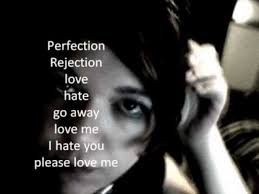 and, of course that is true. Childhood is one contributing factor in BPD. Genes have been shown to play a big part. My father certainly had it and committed suicide when I was 8 years old.
Some therapists, spouses, children, and colleagues of those with BPD might feel the diagnosis is a “sham” or an “excuse for bad behaviour.
I promise those who are living with someone with BPD and think they are being given a hard time. While this may be true, it is much harder for the person who’s been diagnosed with BPD. The ups and downs of emotion, the fear and panic, the shame, the self-harm are all exceedingly painful to the person with BPD. Life or death neediness, knee-jerk responses to perceived abandonment, sudden rages, acute depression and isolation make every day a fight for survival for the borderline.
The Cinderella Disease
“Negative attitudes persist among clinicians toward BPD. Stigmatisation among healthcare providers towards mental illnesses can present obstacles to effective care giving. This may be especially the case for borderline personality disorder (BPD). Its sad because the bottom line is people with BPD suffer inside like nothing I can describe and all the time. BPD is probably one of the most misunderstood mental health disorder out there.
People with BPD are often regarded as hopeless individuals, destined to a life of disaster and emotional misery.They are viewed as destructive and violent toward those around them. Few if any psychological disorders are more mischaracterised or misunderstood.
The name may have perpetuated a widespread misapprehension that the disorder applies to people on the edge of psychosis, who have a limited grasp of reality. Not surprisingly, the popular conception of BPD, shaped by such films as the 1987 movie Fatal Attraction (featuring actress Glenn Close as a woman with the condition), is that of individuals who often act in bizarre and violent ways.”
 borderline personality disorder