It is all in the brain
Over the past decade, much of the literature concerning the biological basis of BPD has shifted to direct visualization of brain structure and function using neuroimaging. Most of the findings pertain to brain regions involved in emotional processing, such as the amygdala, insula, posterior cingulate cortex, hippocampus, anterior cingulate cortex, and prefrontal regulatory regions.
Disturbed interpersonal relations and emotional dysregulation are fundamental aspects of borderline personality disorder (BPD). The amygdala plays important roles in modulating vigilance and generating negative emotional states and is often abnormally reactive in disorders of mood and emotion. The aim of this study was to assess amygdala reactivity in BPD patients relative to normal control subjects. We believed that amygdala hypereactivity contributes to obsessive thinking, dysregulation of emotions, and disturbed interpersonal relations in BPD.
“The Amygdala is a small region of the brain which plays a key role in emotional regulation, emotional memory and responses to emotional stimuli.
Recent technological advances have given neurologists two new ways to create 3-D images of the brain. These techniques are known as Positron Emission Tomography (PET Scanning) and functional Magnetic Resonance Imaging (fMRI). By scanning a person’s brain while prompting them to think in a certain way, scientists are unlocking clues as to which regions of the brain are responsible for different kinds of thought.
Much of this work has focused on the amygdala – a small region deep in the brain shown below. There is one amygdala the right side of the brain and one on the left.“(http://outofthefog.website/other-articles/2015/12/13/the-amygdala-and-its-link-to-bpd)
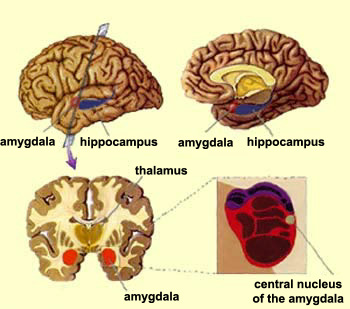
The age at which patients experience emotional trauma seems to be absolutely fundamental to the formation of this part of the brain.
In most people, the beginning of the night is rich in slow wave sleep, alternating with lighter sleep and some REM. As the night progresses, there is less deep sleep, and more REM sleep. Different processes of brain restoration, memory consolidation and learning occur in the different stages of sleep, and they represent different functions of the brain.
This is especially fascinating, since BPD is felt by many to be caused by childhoodtrauma and/or abuse. The implication is that these awful childhood experiences somehow damage the developing brain, “scarring” it and leading to permanent alteration. This may explain why it is so difficult to “treat” patients with BPD, either with medications or psychotherapy.

 borderline personality disorder